


Ragnar Lothbrok
The First King
Ragnar Lothbrok – Short Characterization:
Ragnar Lothbrok (or Lodbrok) was a legendary Viking warrior, king, and conqueror, portrayed in the Norse sagas as a cunning strategist, fearless adventurer, and larger-than-life leader. Known as a dragon-slayer and a terror to England and France, he was said to be a chosen of Odin and the father of famous Viking sons like Bjorn Ironside and Ivar the Boneless. His life blended myth with reality, full of battles, drama, and even some questionable fashion choices—like his hairy trousers, which earned him the nickname “Lothbrok” (“Shaggy Breeches”).

norse explorer Bjarni Herjólfsson
norse explorer
Bjarni Herjólfsson was a Norse explorer known for being one of the first Europeans to sight the North American continent around the year 1000 AD. He was the son of Herjólfur, a prominent chieftain in Iceland, set sail from Greenland in search of new land. Although he did not land on the shores of North America, his journey paved the way for future explorations by other Norse adventurers. Bjarni's legacy is significant in the history of exploration, highlighting the Viking spirit of adventure and discovery.

King Hrothgar
King of Denmark
Hrothgar is a legendary king of the Danes, known for his and strength. He appears in the epic poem "Beowulf," where he is depicted as a noble ruler who builds the great mead hall, Heorot, as a place of community and celebration. Hrothgar faces the terrifying monster Grendel, which threatens his kingdom and ultimately seeks the help of the hero Beowulf. His character embodies the of leadership, hospitality, and the challenges of as he guides his people through adversity.
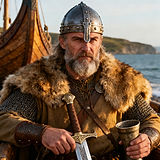
Cnut The Great
King of the North Sea Empire
Cnut Sweynsson — the greatest Viking king in history, who united almost all of Scandinavia under one rule. At the height of his reign, his empire rivaled the Holy Roman Empire in strength and influence. He established tingled, a squad of the noblest families, laying the foundation of Norse chivalry.
Despite practicing bigamy and showing occasional harshness, Cnut is remembered as a wise and effective ruler of England. This favorable portrayal is likely shaped by the written records of the Church — an institution with which he maintained a notably strong alliance.

prince Vladimir the Great
Vladimir the Great (Volodymyr I) was the legendary Grand Prince of Kiev whose vision united a powerful realm and shaped the future of Eastern Europe. His reign from 980 to 1015 is remembered for strength, leadership, and the historic adoption of Christianity in 988 an achievement that forever changed the course of Kievan Rus.

varangian prince
Prince Rurik was the legendary founder of the Rurik dynasty and the first ruler of Novgorod. A fearless Norse leader, he laid the foundations of a dynasty that would shape the history of Kievan Rus' for centuries, becoming a lasting symbol of strength, leadership, and Viking heritage.
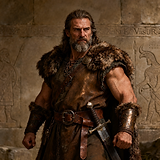
King of ösel
King Yalde of Saaremaa was a legendary ruler of the Baltic Sea, renowned for his fearless leadership and mastery of the northern waters. Defending Saaremaa with courage and honor, he became a lasting symbol of Viking strength, resilience, and the unbreakable spirit of the North.
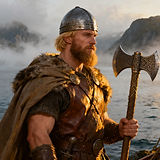
king eric the victorious
King of sweden
Eric the Victorious was the first king to unite much of Sweden under a single crown. Celebrated for his military victories and visionary leadership, he laid the foundations of a powerful kingdom and became a lasting symbol of Viking strength, wisdom, and royal ambition.
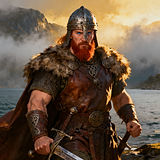
King Olaf II Haraldsson
King of norway
King Olaf II Haraldsson, later known as Saint Olaf, was the King of Norway from 1015 to 1028. Renowned for his courage, determination, and leadership, he united the kingdom and helped establish Christianity in Norway, leaving a legacy that made him one of the nation's most revered and enduring Viking kings.
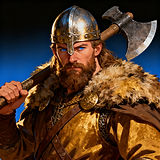
Harald Hardrada
King of Norway
Harald Sigurdsson—better known to history as Harald Hardrada, meaning "Harald the Hard Ruler"—was the last great Viking king. Towering, golden-haired, and battle-hardened, he was forged in fire and exile. As a youth, he fled Norway after his half-brother Olaf was slain in battle. Harald’s journey led him to the glittering courts of Kievan Rus’ and the elite Varangian Guard in Constantinople, where he rose to fame as a warrior, tactician, and legend.
When he finally returned to Norway, he did not come quietly. He came with gold, ambition, and the iron will to rule. He became king in 1046 and ruled with strength, wisdom, and a flair for poetic justice. Harald founded Oslo, revitalized trade, and reinforced Christianity—though his sword was never far.
He died in 1066 at the Battle of Stamford Bridge, in a failed bid to claim the English throne—marking, for many, the end of the Viking Age.

Harald Fairhair
First King of Norway
Harald Fairhair is remembered as the bold unifier of Norway. Determined and ambitious, he vowed never to cut his hair until all of Norway was his. Years of conquest and cunning diplomacy led him to victory, and his golden locks were finally shorn in triumph. Feared in battle, respected in council, he forged a legacy from chaos and clan rivalries. His rule laid the foundation for a united realm, and his name echoed through the sagas as the golden-haired king who would not yield.

Erik the Red
Explorer
Erik the Red was a man of bold deeds and a temper as fiery as his hair. Banished from Norway, then Iceland, he sailed west into the unknown and found a vast, icy land. With a flair for naming and persuasion, he called it “Greenland” to lure settlers—and it worked. A fierce outlaw turned pioneer, Erik carved a home from frost and stone. He may not have been the easiest neighbor, but he was the kind who’d always make sure the longhouse had a roof… and a sword at the door.
And as they say:
“He may have been red—but his wit was always razor sharp.”

King of Norway
Harald Greycloak was a king born of blood and raised in the shadow of vengeance. The son of Erik Bloodaxe, he inherited not just his father’s sword but his will to rule. Known for his silver-grey cloak, gifted by his Scottish allies, Harald brought both cunning and courage to the throne. Though his reign was short, it was fierce—marked by bold moves to secure power in a divided land.
They say he wore grey, but ruled in storm.
And like the cloak on his shoulders—he never faded quietly.
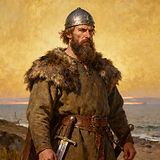
Haakon The Good
King of Norway
Haakon the Good was a Viking king unlike most—raised in the courts of England, he returned to Norway with both a sword and a cross. Son of Harald Fairhair, he sought not only to rule but to heal a divided land. Wise in council and brave in war, he tried to bring peace through faith, offering the old gods respect while planting seeds of the new. He earned his title not through conquest alone, but through honor.
As the skalds sang:
"He carried steel in one hand—and mercy in the other."

Queen Lagertha Lothbrok
Queen of Norway
Lagertha was a legendary Viking shieldmaiden and the first wife of Ragnar Lothbrok. Known for her courage and cunning, she fought fiercely alongside men, earning fame for her strength and independence. According to the sagas, she once killed a wild beast with her bare hands, later rising to rule as a queen in her own right, without the need for any man by her side.
As the story goes, when Ragnar saw her defeat a wolf with nothing but her hands, he famously remarked:
"With a woman like that, you either marry her… or run for your life."

Queen of Sweden Sigrid the Proud
Queen of Sweden
Sigrid the Proud was a stunning yet unyielding daughter of Skogul-Tosti, a powerful Swedish nobleman. In the Norse sagas, she stands tall among the fiercest Viking women. A true-born pagan, she refused to be baptized under any crown or cross — her loyalty lay with the old gods and the ancient ways.
Her pride was legendary. So legendary, in fact, they called her “Haughty Sigrid.” Though raised in a Christian-dominated land, she chose the old path — one of fire, frost, and freedom. She worshipped Norse gods, believed in their strength, and never waited around for Judgment Day. Instead, she lived boldly, wildly, and exactly as she pleased.
And if any king tried to tame her... well, let’s just say he probably left the conversation with fewer teeth.

Harald Bluetooth
King of Denmark
With absolute authority in Denmark Harald Bluetooth could also turn their attention beyond its borders. He came several times to help Richard of Normandy (in the years 945 and 963). He also took Harald Fairhair's son Harald Gråfell under his protection in his battle for the Norwegian throne, and helped him again later as part of the tactical game with different players to play off against each other. By setting up a trap for Harald Gråfell in 970 that got him killed, Harald Bluetooth focused instead on the earl, who had helped to defend Daneveldet against the Germans. It turned out that Earl Hakon was a much cunning ruler than the Danish king had expected, and he Earl shook off his ties to Denmark as soon as he had come to power.
Harald was a king who established Christianity in Denmark.

Floki the carpenter
legendary boatbuilder
Floki the carpenter is a skilled craftsman known for his exceptional woodworking abilities and innovative designs. With years of experience in the industry, he has mastered the art of creating beautiful and functional pieces that enhance any. Floki takes pride in using high-quality materials and traditional techniques, ensuring that each project reflects passion for craftsmanship. His dedication to his craft and attention to detail have earned him a loyal clientele and a reputation for excellence in the woodworking community.

Rollo
King of Normandy
Rollo was a towering Viking warrior with a fiery temper and a heart as wild as the northern seas. Known as "Rollo the Walker" because no horse could carry his massive frame, he marched into history with iron will and unmatched resolve. He led raids, claimed land, and carved out a kingdom in Normandy, becoming the ancestor of William the Conqueror.
Rollo didn’t just conquer with brute force—he was a tactician, a negotiator, and, perhaps surprisingly, a man who once converted to Christianity… likely after realizing even Odin might not argue with a good land deal.
Fun fact: When asked to kiss the king’s foot as a sign of loyalty, Rollo refused—then ordered one of his warriors to do it instead. The man lifted the king's leg so high, the king fell on his back. Rollo may have submitted... but only on his own terms.

King Airisto Mettälä
King of finland
Airisto Mettälä is a legendary guardian of the Finnish archipelago, renowned for his resilience, courage, and deep connection to the northern seas. A symbol of Finnish strength and Viking spirit, his legacy reflects the endurance, honor, and freedom of the North.
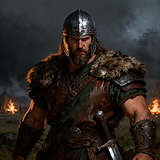
Ivar The Boneless
Leader of the Great Heathen Army
Ivar Ragnarsson, better known as Ivar the Boneless, was a fearsome Viking warlord—both feared in battle and shrouded in mystery. Son of the legendary Ragnar Lothbrok and Aslaug the Seeress, Ivar was said to have been born with a strange condition that left his bones soft or malformed. But where his body was frail, his mind was sharp as any sword.
He became one of the most brilliant strategists of the Viking Age, co-leading the Great Heathen Army that swept across Anglo-Saxon England in revenge for Ragnar's death. Ivar's warfare was ruthless and clever—his enemies never knew whether to expect brute force or cunning trickery.
Some called him a monster. Others called him a genius. And some whispered that Odin himself had touched his soul.

King Thorgeir of Osilia
King of ösel
King Thorgeir of Osilia was a legendary ruler of Osilia (Saaremaa), renowned for his fearless leadership and mastery of the Baltic Sea. A proud defender of his homeland, he forged a legacy of courage, resilience, and Viking honor that continues to inspire the spirit of the North.

Bjorn Ironside
King of sweden
Björn Ironside was a Viking warrior of fearless heart and unbreakable will. Son of the legendary Ragnar Lothbrok, he carved his own legacy across the seas, raiding the coasts of Frankia, Italy, and beyond. With sword in hand and iron in spirit, he led fleets like a storm from the north. Tales say his body could not be pierced in battle—hence the name Ironside. Whether myth or truth, none who met him in war ever forgot him.
And as he once told his crew:
"If they shut the gates, we’ll knock with fire."
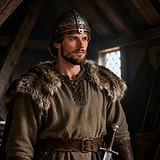
Erik Bloodaxe
King of Norway
Erik Bloodaxe was not a man of half-measures. A son of Harald Fairhair, he earned his fearsome name through ruthless ambition and a sword that rarely rested. King of Norway for a time, and later ruler of Northumbria, Erik’s reigns were marked by bloodshed, betrayal, and a relentless pursuit of power. He was a warrior king through and through—feared, exiled, returned, and remembered.
As the skalds would whisper:
"He ruled with the axe, and fell with legend."

Leif Erikson
sea king
Leif Erikson was a sailor of the unknown, a seeker of far shores. Son of Erik the Red, he carried his father’s fire and carved his name into the wind-swept edge of the world. Around the year 1000, he sailed west beyond Greenland—and found a strange new land he called Vinland. Lush, wild, and rich with promise, it lay far before Columbus ever dreamed of sails.
Leif brought Christianity to Greenland, but legend says he also brought home the scent of forests never seen by Viking eyes.
They called him “Leif the Lucky”—but make no mistake: it was skill, not luck, that guided him to the edge of history.